
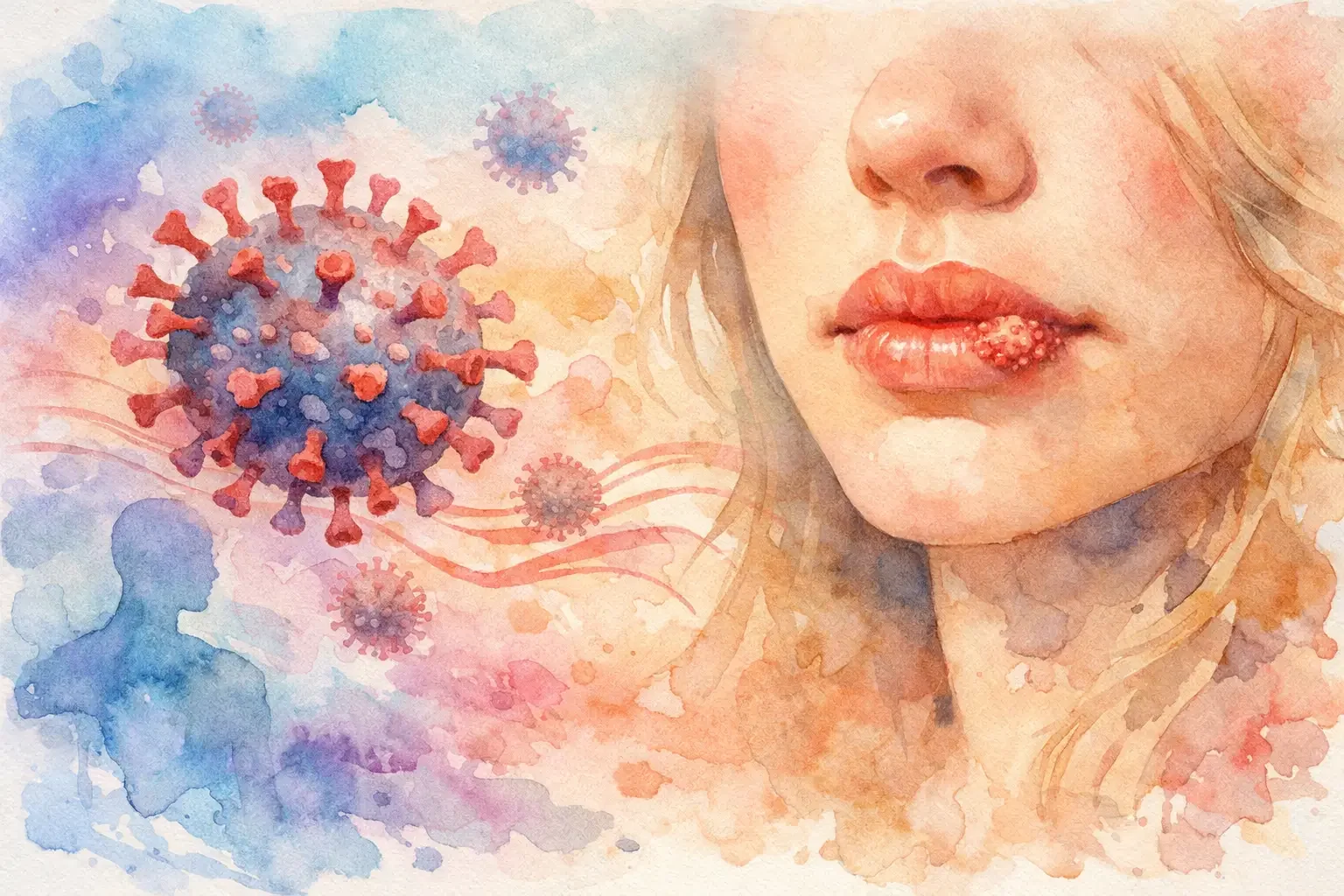
What Causes a Cold Sore Outbreak?
That familiar tingling on the lip can feel unfairly predictable. If you have ever wondered what causes a cold sore outbreak, the short answer is this: the virus stays in the body after the first exposure, and certain triggers can make it reactivate when your system is under strain.
For many people, the frustrating part is not just getting a cold sore. It is getting one right before a trip, an event, a stressful week at work, or after doing everything “right.” The good news is that outbreaks often follow patterns. Once you understand those patterns, it becomes easier to respond early and keep support on hand.
What causes a cold sore outbreak in the first place?
Cold sores are commonly linked to herpes simplex virus type 1, or HSV-1. After the initial infection, the virus does not fully leave the body. Instead, it remains inactive in nerve cells and can reactivate later. That reactivation is what leads to a visible outbreak.
This is why cold sores tend to recur. You are not always dealing with a new exposure. More often, you are dealing with a familiar virus responding to internal or external stressors. Some people have very few flare-ups, while others notice outbreaks several times a year. It depends on the individual, their immune resilience, and the kinds of triggers they encounter.
In practical terms, a cold sore outbreak usually starts when the body is stretched thin in some way. That strain may be physical, emotional, environmental, or hormonal. Sometimes there is one obvious cause. Sometimes it is a stack of smaller pressures happening at the same time.
The most common cold sore triggers
Stress is one of the biggest reasons people notice a flare-up. Emotional stress can affect sleep, appetite, immune function, and daily routines all at once. When your body is trying to manage multiple demands, it may be easier for the virus to reactivate.
Illness is another common trigger. If you are fighting off a cold, flu, fever, or another infection, your immune system is already occupied. That temporary dip in resilience can create the conditions for a cold sore to appear.
Sun exposure is a major trigger for some people, especially on the lips. A long beach day, skiing trip, or even extended time outdoors without lip protection can set off an outbreak. If your cold sores seem to show up after vacations or outdoor events, sun may be playing a bigger role than you think.
Hormonal shifts can also matter. Some people notice outbreaks around menstruation, during periods of intense hormonal fluctuation, or at other predictable points in their cycle. This does not happen to everyone, but when it does, the pattern is often surprisingly consistent.
Fatigue and lack of sleep are easy to underestimate. A few nights of poor sleep, travel exhaustion, or simply pushing through a demanding week can lower your resistance enough to trigger symptoms. This is one reason outbreaks often seem to arrive when life is already inconvenient.
Physical irritation may contribute too. Chapped lips, dental work, friction, or skin irritation around the mouth can sometimes create an opening for a flare-up. It is not always the main cause, but it can be part of the picture.
Why triggers do not affect everyone the same way
Two people can have the same virus and very different experiences. One person may only get a cold sore after a fever. Another may get one after too much sun and too little sleep. Another may have no clear trigger at all.
That variation is normal. Immune function, stress load, genetics, nutrition, skin sensitivity, and overall health habits all influence how often outbreaks happen. This is why a one-size-fits-all explanation usually falls short.
It also helps explain why prevention can feel inconsistent. You might manage stress well but still get a flare-up after travel. Or you might avoid sun exposure and still notice symptoms during a busy month. Outbreaks are often caused by a combination of factors rather than one single event.
Early signs matter more than most people realize
If you are prone to recurring outbreaks, paying attention to the first signs can make a real difference in how you manage the episode. Many people notice tingling, itching, tightness, tenderness, or a slight burning feeling before a sore becomes visible.
That early window matters because it gives you a chance to act quickly. Instead of waiting until the cold sore is fully developed, you can begin your wellness routine as soon as you notice the first signal. For many people, this is the moment when having a simple support option already at home is most valuable.
Convenience matters here. If your preferred support is hard to find, buried in a cabinet, or something you need to order after symptoms begin, you lose precious time. Keeping a travel-friendly option on hand can make it easier to respond without delay or added stress.
What causes a cold sore outbreak to keep coming back?
Recurring outbreaks usually point to repeated exposure to personal triggers, not necessarily worsening health. If you keep getting cold sores, your body may be encountering the same strain pattern over and over again. That could mean chronic stress, frequent sun exposure, poor sleep, seasonal immune challenges, or a demanding schedule that leaves little room for recovery.
This is why tracking your outbreaks can be useful. You do not need an elaborate journal. A note in your phone about timing, stress level, sleep, illness, weather, or cycle changes can reveal patterns surprisingly fast. Once you know your likely triggers, you can build a more realistic plan around them.
For example, if outbreaks happen during travel, your strategy might focus on sleep, hydration, lip protection, and keeping rapid-response support in your bag. If they happen during stressful periods, your plan may center more on earlier intervention and immune-supportive habits. The right approach depends on your pattern.
Practical ways to lower the chance of a flare-up
You cannot always prevent a cold sore completely, but you can reduce avoidable triggers and make outbreaks easier to manage. Consistent sleep, stress management, sun protection for the lips, hydration, and supportive daily wellness habits all help create a steadier baseline.
That said, real life is not always ideal. People travel, get sick, miss sleep, and deal with stress. That is why it helps to think in two layers: reduce triggers when you can, and keep support on hand for the moments you cannot fully control.
For many health-conscious adults, that means choosing a non-prescription wellness option that feels simple, discreet, and easy to use at the first sign of trouble. Botanical Wellness is built around that kind of practical support, especially for people who want a plant-based option they can keep nearby without turning every flare-up into a bigger ordeal.
When to be more cautious
Most recurrent cold sores follow a familiar pattern, but there are times when extra caution makes sense. If a sore is unusually severe, lasts longer than expected, spreads beyond your normal pattern, or involves the eye area, it is wise to seek medical guidance. The same goes if outbreaks become much more frequent than usual or if you are immunocompromised.
A wellness routine can be useful, but it should work alongside common sense. If something feels different, more painful, or harder to manage than your usual experience, do not ignore that signal.
A calmer way to think about outbreaks
Cold sores can feel personal, but they are also common and often highly trigger-driven. The more helpful question is not just what causes a cold sore outbreak in general, but what tends to cause your outbreaks specifically.
Once you know that, your routine can become much less reactive. You start noticing the timing, spotting the early signs, and keeping the right support close instead of scrambling after the fact. That small shift can make recurring flare-ups feel more manageable, more private, and far less disruptive to everyday life.
If cold sores tend to catch you off guard, the goal is not perfection. It is being ready when your body gives you that first warning sign.

What Is the Strongest Natural Antiviral for Herpes?
Many natural substances have shown antiviral activity against herpes in laboratory or topical studies, but there is no single “strongest” natural antiviral supported by definitive evidence. This article reviews commonly cited plant-based antivirals, explains what research actually shows, and clarifies the difference between promising data and exaggerated claims.
Introduction
If you search “strongest natural antiviral for herpes,” you’ll find confident answers, miracle claims, and ranked lists that rarely explain how those conclusions were reached. Most omit an important reality: there is no single strongest natural antiviral supported by definitive human evidence.
What does exist is a growing body of laboratory, topical, and early clinical research suggesting that certain plants and natural compounds show antiviral activity against herpes simplex viruses (HSV-1 and HSV-2) through different mechanisms.
This post separates what research actually shows from what social media often exaggerates.
Claim
“There is a strongest natural antiviral that cures or reliably suppresses herpes.”
What’s Being Said Online
Social media posts and product marketing often:
Name one herb or supplement as “the most powerful”
Suggest universal effectiveness
Blur the line between laboratory research and real-world results
Imply cure or guaranteed suppression
These claims are appealing, but they are not supported by current evidence.
What the Data Shows
Research to date suggests multiple natural substances show antiviral activity, each in different contexts and through different biological mechanisms. None are proven cures, and most research remains in vitro, topical, or early-stage.
Below are several of the most frequently studied natural antivirals for herpes, based on independent research volume and consistency of findings.
Lemon Balm (Melissa officinalis L.)
Lemon balm is one of the most studied topical herbs for herpes labialis (cold sores).
Human clinical trials using creams and extracts have shown:
Reduced symptom severity
Faster lesion healing
Active compounds such as rosmarinic acid appear to:
Inhibit viral attachment
Prevent viral entry into host cells
These effects are topical, not systemic.
Evidence type: Human topical trials and in vitro studies
Primary mechanism: Viral entry inhibition
Propolis
Propolis is a resin-like compound collected by bees and has demonstrated both antiviral and wound-healing properties.
Clinical studies using 3% propolis ointments have shown:
Shorter healing time compared to placebo
Comparable or better outcomes than some standard topical antivirals in limited trials
Mechanisms may include:
Inhibition of viral replication
Support of tissue repair
Evidence type: Human topical trials
Primary mechanism: Replication inhibition and wound support
Neem (Azadirachta indica L.) Bark Extract
Neem bark extract has shown antiviral activity in laboratory studies.
In vitro research indicates:
Interference with viral attachment and fusion
Blocking HSV-1 entry into host cells
No significant toxicity was observed at effective concentrations in cell models
Evidence type: In vitro studies
Primary mechanism: Viral attachment and fusion inhibition
Prunella vulgaris (Self-Heal)
Prunella vulgaris contains polysaccharides that demonstrate potent anti-HSV activity in laboratory settings.
Studies show:
Activity against HSV-1 and HSV-2
Effectiveness even against acyclovir-resistant strains
Mechanisms include:
Direct virucidal activity
Inhibition of viral adsorption to host cells
Evidence type: In vitro studies
Primary mechanism: Virucidal action and adsorption inhibition
Rosemary (Rosmarinus officinalis L.) Extract
Rosemary extracts have shown antiviral effects in laboratory studies.
In vitro data indicates:
Reduced HSV-1 and HSV-2 plaque formation
Potential interference with viral absorption into cells
These findings suggest possible topical potential, not confirmed clinical efficacy.
Evidence type: In vitro studies
Primary mechanism: Viral absorption interference
Withania somnifera (Ashwagandha)
Ashwagandha root extracts have demonstrated antiviral activity against HSV-1 in laboratory research.
Identified compounds such as withaferin A may:
Inhibit viral DNA polymerase
Research remains early and experimental
Evidence type: In vitro studies
Primary mechanism: Viral replication inhibition
Larrea tridentata (Creosote Bush)
Larrea tridentata has a long history of medicinal use and has been studied for antiviral lignans.
Research indicates:
Broad antiviral activity in laboratory models
Mechanisms involving viral replication interference
Safety depends heavily on preparation, dosage, and route of use
Evidence source:
National Center for Biotechnology Information (NCBI)
https://pmc.ncbi.nlm.nih.gov/articles/PMC4488564/
Evidence type: In vitro and mechanistic studies
Primary mechanism: Replication interference via lignans
Clarification: Why There Is No “Strongest” Natural Antiviral
These substances:
Act through different biological pathways
Use different preparations (extracts, creams, polysaccharides)
Show effects under different experimental conditions
Additionally:
Human bodies vary widely
Viral behavior varies by strain and immune response
What works well for one person may not work for another
This variability is not a flaw of natural medicine. It is the nature of biological systems.
Safety, Individual Response, and Trial-and-Error
One of the advantages of many plant-based approaches is accessibility and relative safety when used appropriately. However:
“Natural” does not mean “risk-free”
Individual allergies and sensitivities exist
New herbs, extracts, or tinctures should be:
Introduced slowly
Patch tested when topical
Used cautiously if systemic
Trial-and-error is common in natural health, but it should always be informed and conservative.
Bottom Line
There is no single strongest natural antiviral for herpes supported by definitive evidence.
What research does show is that multiple natural substances demonstrate antiviral activity through different mechanisms, particularly in topical or laboratory settings. These findings are promising, but not universal, not curative, and not guaranteed.
The most responsible approach is:
Understanding the evidence
Respecting individual variability
Avoiding exaggerated claims
Making informed, cautious choices
Reliable information empowers better decisions. Fear does not.
Sources
National Center for Biotechnology Information (NCBI)
https://pmc.ncbi.nlm.nih.gov/articles/PMC4488564/Peer-reviewed clinical and in vitro studies on Melissa officinalis, propolis, Prunella vulgaris, neem, rosemary, and Withania somnifera (various journals)